
Guides
Practical guides for working between France and Asia: trade agreements, importing and exporting, avoiding scams. Every guide cites its official sources and shows when it was last updated.
REACH governs chemicals in the European Union, including those contained in imported articles.
The RoHS directive restricts certain hazardous substances (lead, mercury, cadmium and others) in electrical and electronic equipment.
Read more: Electrical equipment and hazardous substances (RoHS)
The General Data Protection Regulation governs the use of personal data of people located in the EU.
Regulation (EU) 2019/1150 protects businesses selling to European CONSUMERS through an online platform (marketplace, comparison site, app store).
Read more: Selling to consumers on a marketplace: your rights (P2B)
Wood, rubber, coffee, cocoa, palm oil, soya, cattle: the European Union prohibits selling these products if they come from land deforested after 31 December 2020. This is the EUDR regulation (RDUE in French). It applies on 30 December 2026 to large and medium-sized companies, and on 30 June 2027 to micro and small companies. Here is what a French importer and a Chinese, Thai or Vietnamese supplier must prepare.
For information only, up to date on 31 October 2026. General information, not legal advice.
The products concerned
| Raw material | Examples of products concerned |
|---|---|
| Wood | furniture, parquet, plywood, paper, cardboard, charcoal |
| Natural rubber (hevea) | tyres, gloves, hoses, rubber parts |
| Coffee | green, roasted, decaffeinated coffee |
| Cocoa | beans, paste, butter, chocolate |
| Palm oil | oil, some derivatives |
| Soya | beans, oilcake, flour |
| Cattle | live animals, meat |
Not concerned:
- bovine leather and hides: removed from the list by Delegated Regulation (EU) 2026/2102 of 13 July 2026, in force since 18 September 2026;
- synthetic rubber (only natural rubber from hevea is covered);
- products made entirely of recycled material (a product containing a share of new material remains concerned for that share);
- metals, textiles, ceramics, spices.
The exact list, with customs codes, is in Annex I of Regulation (EU) 2023/1115 as amended.
The dates
| Who | Date of application |
|---|---|
| Large and medium-sized companies | 30 December 2026 |
| Micro and small companies | 30 June 2027 |
| Micro and small companies already subject to the former timber regulation | 30 December 2026 |
These dates come from Regulation (EU) 2025/2650. The review published by the Commission on 4 May 2026 did not change the law. Be careful: even if you are a small company, a larger customer will ask you for the information from December 2026, because it will already be concerned.
What must be proven
- Zero deforestation: the product comes from land that has not been deforested after 31 December 2020.
- Legality: it was produced in compliance with the laws of the country of production (land rights, labour, environment).
- Geolocation: the coordinates of the plots of production. One GPS point is enough for a plot of 4 hectares or less; above that, the outline (polygon) is needed. For cattle: the location of the farms.
The importer (the "operator") submits a due diligence statement in the European Union's information system before placing the product on the market, and keeps the evidence for 5 years.
China, Thailand, Vietnam: "low risk" countries
The Commission classifies countries according to the risk of deforestation. China, Thailand and Vietnam are classified as low risk. In practice, the importer follows simplified due diligence, without a full risk assessment, but must still collect the information, including geolocation. Only four countries are classified as high risk: Belarus, North Korea, Myanmar and Russia.
For a small producer: a person, a micro or a small company of a low-risk country that sells what it produces itself may make a single simplified declaration, with an identifier to pass on to its buyer. A postal address may replace the GPS coordinates in some cases.
Concrete examples
Fictitious examples, to help understand.
- A furniture workshop in Vietnam selling wooden tables to a shop in France: its customer will ask where the wood comes from (plots, coordinates), the evidence of legal harvesting and the invoices for buying the wood.
- A small coffee cooperative in the highlands of Vietnam selling to a roaster in Lyon: one GPS point is needed for each plot of each grower. A phone app is often enough to record it on the spot.
- A rubber glove factory in Thailand: concerned if the gloves are made of natural latex, not if they are made of nitrile (synthetic rubber).
Checklist for the supplier in Asia
- Check whether your products are on the list (customs code).
- List your own suppliers of raw material.
- Record the GPS coordinates of each plot (point or outline depending on the area).
- Gather the evidence of legality: land titles or leases, operating permits.
- Link each lot sold to its plots (lot number → plots).
- Send this information to your European customer before shipment, and keep it for 5 years.
An FSC or PEFC certification helps, but is not enough on its own: the EUDR requires geolocation, which these certifications do not always provide.
The sheet to print
All the checkboxes of this guide on a single A4 page, to print or to send to your supplier. Free download, no e-mail required. The sheet is in French.
Download the EUDR checklist (PDF in French, 1 page, 43 KB)What the Passerelle does, and what it does not do
The Passerelle checks that a company exists in the official register of its country and publishes dated records. It does not certify that a product complies with the EUDR: that is the responsibility of the importer and the authorities. In fact, there is no such thing as an "EUDR certificate": be wary of anyone who sells you one.
To go further
Looking for a supplier of wood, coffee or rubber in Asia, verified in the official register of its country?
Publish a requestSources (consulted on 31 October 2026): Regulation (EU) 2023/1115 (articles 2, 3, 4, 9, 12, Annex I); Regulation (EU) 2025/2650 (postponement and article 4a); Delegated Regulation (EU) 2026/2102 of 13 July 2026 (removal of leather); Commission report COM(2026) 191 of 4 May 2026 — EUR-Lex; European Commission, "Country classification list" (green-forum.ec.europa.eu). For information only: this information does not engage the liability of Passerelle France-Asie; only the European Commission and the national authorities are authoritative.
Since 1 January 2026, steel, aluminium, cement, fertilisers, hydrogen and electricity imported into the European Union pay a carbon price: this is the CBAM (Carbon Border Adjustment Mechanism, MACF in French). This guide explains, simply, who is concerned, how much it costs and what the Chinese, Thai or Vietnamese supplier must prepare.
For information only, up to date on 31 October 2026. General information, not legal advice.
The CBAM in 4 sentences
- European factories pay for their CO₂ emissions. To make it fair, the same products when imported also pay.
- It is the European importer who declares and buys "CBAM certificates". The Asian supplier has no direct obligation, but its customer will ask it for the emissions of its products.
- Since 1 January 2026, the definitive system applies (2023-2025 was only a trial period with reports).
- The price follows the European carbon market.
Am I concerned? The 50-tonne threshold
An importer bringing in 50 tonnes or less per year of CBAM goods (all added together) is not concerned. Above that, it must become an "authorised CBAM declarant". Be careful: if the 50 tonnes are exceeded during the year, the whole year becomes concerned. This threshold does not apply to electricity and hydrogen: these importers are always concerned.
According to the review published by the Commission on 30 September 2026, imports below this threshold account for only 0.87% of imported emissions.
The products concerned
| Sector | Examples | Customs codes (CN) |
|---|---|---|
| Iron and steel | sheets, bars, tubes, screws, bolts | chapter 72 and some products of chapter 73 |
| Aluminium | unwrought aluminium, profiles, foil | some products of chapter 76 |
| Cement | cement, clinker | 2523 (and 2507 00 80) |
| Fertilisers | urea, nitrates, ammonia, nitrogen fertilisers | 2808 00 00, 2814, 2834 21 00, 3102, 3105 (except 3105 60 00) |
| Hydrogen | hydrogen | 2804 10 00 |
| Electricity | imported electricity | 2716 00 00 |
The exact list of codes is in Annex I of Regulation (EU) 2023/956. Check the code of YOUR product before concluding. Not concerned today: textiles, plastics, ceramics, wood, furniture, food (for wood, coffee or rubber, see our guide on deforestation instead).
How much does a certificate cost?
| Quarter of 2026 | Price of a certificate (1 tonne of CO₂) | Published on |
|---|---|---|
| 1st quarter | €75.36 | 7 April 2026 |
| 2nd quarter | €75.28 | 6 July 2026 |
| 3rd quarter | €82.32 | 5 October 2026 |
| 4th quarter | published on 4 January 2027 | — |
The price is the average of the auctions of European carbon allowances. In 2026, it is published every quarter; from 2027, every week.
Good to know: the number of certificates to be paid is reduced to take account of the free allowances still given to European factories. This reduction decreases every year until 2034. The real cost in 2026 is therefore much lower than a simple "tonnes of CO₂ × price". Ask your declarant or customs for a precise calculation.
The dates to remember
| Date | What happens |
|---|---|
| 1 January 2026 | Definitive system: imports in 2026 count |
| 1 February 2027 | Start of the sale of CBAM certificates |
| Every quarter from 2027 | Hold at least 50% of the certificates corresponding to the imports of the current year |
| 30 September 2027 | Deadline for the first annual declaration (2026 imports) and surrender of certificates |
The declaration is annual, not quarterly. Quarterly reports belonged to the 2023-2025 trial period.
Supplier in China, Thailand or Vietnam: what your customer will ask you for
- The real emissions of your products (the "embedded emissions"): fuels burned in the factory, electricity consumed, raw materials.
- A check by an accredited verifier: for real emissions declared on imports since 1 January 2026, it is mandatory.
- Otherwise, the default values: without verified data, your customer uses values set by the European Union, increased by 10% in 2026, 20% in 2027 and 30% from 2028 (1% for fertilisers). They are often unfavourable: a clean factory has every interest in providing its real data.
According to the Commission, at the very beginning of 2026, the main countries of origin of CBAM imports were Türkiye, China, India, Canada, Taiwan and Vietnam. For a Vietnamese or Chinese manufacturer of steel or aluminium, the CBAM is therefore already a commercial reality.
Checklist
For the importer in France:
- Add up the tonnes of these products imported during the year. 50 tonnes or less: not concerned (except electricity and hydrogen).
- Above that: apply for authorisation as a CBAM declarant.
- Ask each supplier for its verified emissions, or plan for the default values.
- Keep the supporting documents until the end of the 4th year after the declaration.
For the supplier in Asia:
- Check whether your products are on the list (CN code).
- Gather the factory's data: fuels, electricity, production.
- Have this data checked by an accredited verifier.
- Send the data to your European customer before shipment.
The sheet to print
All the checkboxes of this guide on a single A4 page, to print or to send to your supplier. Free download, no e-mail required. The sheet is in French.
Download the CBAM checklist (PDF in French, 1 page, 50 KB)What the Passerelle does, and what it does not do
The Passerelle checks that a company exists in the official register of its country and publishes dated records. It does not certify the CBAM compliance of a product and does not calculate emissions: only an accredited verifier and customs can do that. On a profile, however, a company may state that it can provide its emissions data: this is useful information for a buyer.
To go further
Looking for a supplier of steel, aluminium or fertilisers in Asia, verified in the official register of its country?
Publish a requestSources (consulted on 31 October 2026): European Commission, "CBAM — Questions and Answers" (updated on 15/10/2026); European Commission, "Price of CBAM certificates"; European Commission, "CBAM de minimis threshold assessment" (30/09/2026); European Commission, "CBAM successfully entered into force on 1 January 2026" (14/01/2026); Regulation (EU) 2023/956 (articles 7 and 9, Annex I) — EUR-Lex. The French customs website (douane.gouv.fr) could not be consulted on the day of writing. For information only: this information does not engage the liability of Passerelle France-Asie; only the European Commission and customs are authoritative.
In Vietnam or Thailand, a flat tyre or a broken phone is often repaired on the pavement, in a few minutes, by a repairer set up on the street corner.
Over there
Little equipment, a lot of know-how, and a simple principle: repair rather than throw away, straight away, at a low price.
In France
Repairers who come to you (bikes, scooters, phones, household appliances) are growing, helped by people wanting to repair rather than buy again. Many neighbourhoods do not have one yet.
The idea for the Passerelle
- A repairer in France can find suppliers of spare parts and tools in Asia.
- Experienced repairers can share their way of working with partners in France.
To check before you start
- Depending on the activity, you may need a qualification or registration with the Chambre de métiers et de l'artisanat (French chamber of trades and crafts).
- Imported spare parts must meet European standards (CE marking for electrical items).
For information only (page of 27/10/2026): this information does not engage the responsibility of Passerelle France-Asie. Rules change and depend on your situation: before you start, check with the official body mentioned.
In Thailand, craftspeople walk through the streets and along the beaches and offer you a braided bracelet with your name and your country's flag. It is made in front of you, in a few minutes.
Over there
Coloured threads, letter beads, a small woven flag: the customer chooses, the craftsperson braids, and the souvenir is unique, with their name on it.
In France
People like personalised souvenirs, but they order them online and receive them days later. Seeing one made in front of you, in a few minutes, is rare: markets, festivals, tourist spots, weddings.
The idea for the Passerelle
- A craftsperson or a seller in France can find suppliers of threads, letter beads and small flags in Asia.
- Asian craftspeople can share their skills with partners in France (workshops, demonstrations).
To check before you start
- Selling on the move requires a travelling trader's card (carte de commerçant ambulant): find out on the guichet unique des entreprises (French one-stop shop for business formalities) (formalites.entreprises.gouv.fr).
- Setting up on a pavement, a square or a market requires permission from the town hall.
- Jewellery for children must meet safety rules (small parts, banned substances): ask the DGCCRF (French consumer protection authority).
For information only (page of 27/10/2026): this information does not engage the responsibility of Passerelle France-Asie. Rules change and depend on your situation: before you start, check with the official body mentioned.
In China, Thailand or Vietnam, many doors of flats and houses open with a code, a fingerprint or a phone. No more keys to lose or to have copied.
Over there
The lock has a keypad, sometimes a fingerprint reader, and connects to an app over Wi-Fi. You can give a temporary code to a guest or a delivery person, and know who came in.
In France
These locks are sold, but they are rarely fitted, especially in homes rented by the night or by the month, where handing over keys is a real headache.
The idea for the Passerelle
- A locksmith or an installer in France can find a manufacturer in China and offer fitting and maintenance.
- An Asian manufacturer can find distributors and installers in France.
To check before you start
- A device that communicates by radio (Wi-Fi, Bluetooth) must meet European rules for radio equipment, including cybersecurity, and carry the CE marking: ask the DGCCRF (French consumer protection authority).
- Insurers often require certified locks to cover a burglary: check with your insurer before fitting.
- Always plan a way to open the door if the battery or the network fails (spare key, backup power).
For information only (page of 27/10/2026): this information does not engage the responsibility of Passerelle France-Asie. Rules change and depend on your situation: before you start, check with the official body mentioned.
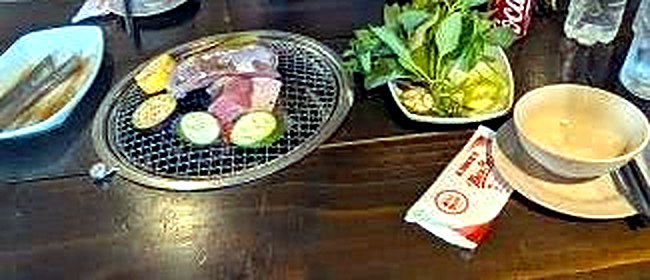
In Korea, Vietnam or Thailand, many restaurants put a grill in the middle of the table: you cook the meat, vegetables and mushrooms yourself, while chatting.
Over there
The restaurant brings the raw food, cut and seasoned; the customer cooks at their own pace. The meal lasts, people share: it is a friendly moment more than just a meal.
In France
People know raclette and hot-stone cooking at home. Table barbecue restaurants exist in a few big cities, but are still rare elsewhere.
The idea for the Passerelle
- A restaurant in France can find manufacturers in Asia of tables with a built-in grill and of extractor hoods.
- An Asian manufacturer can find restaurant owners and equipment distributors in France.
To check before you start
- Gas or electric appliances must carry the CE marking and meet European rules.
- Cooking at the table in a restaurant requires good smoke extraction and compliance with fire safety rules for places open to the public: ask your town hall, and the DDPP (French local food safety and consumer protection office) for hygiene.
For information only (page of 27/10/2026): this information does not engage the responsibility of Passerelle France-Asie. Rules change and depend on your situation: before you start, check with the official body mentioned.
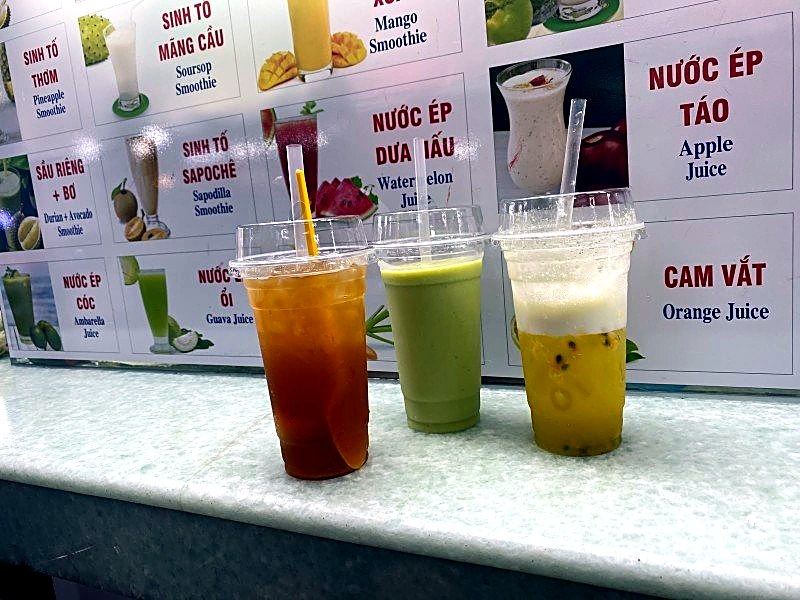
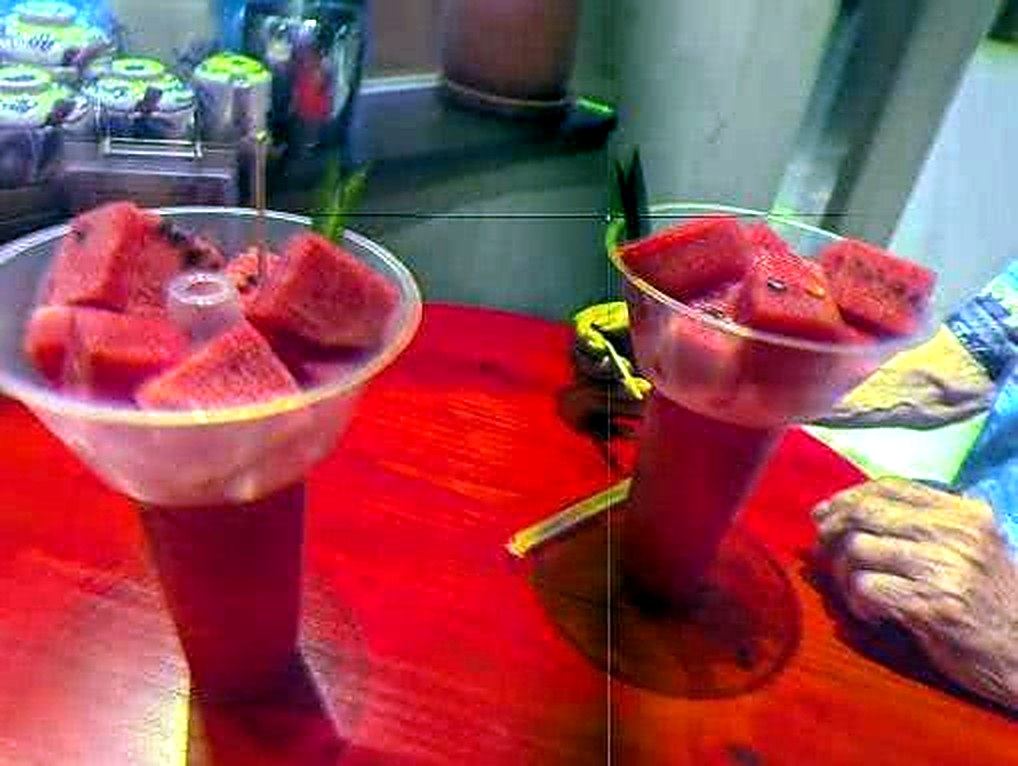
In Vietnam, "sinh tố" (smoothie) counters prepare drinks in front of you from fresh fruit blended with ice: avocado, mango, soursop, sapodilla, guava, watermelon, passion fruit…
Over there
A blender, ripe fruit from the market, ice, sometimes a little condensed milk: the drink is ready in one minute, for a small price. The avocado smoothie, sweet and creamy, is drunk like a dessert.
In France
Smoothie bars exist, but they mostly offer strawberry, banana or red berries. Fresh tropical fruits (soursop, sapodilla, sweet avocado) are almost impossible to find as drinks.
The idea for the Passerelle
- A juice bar or a restaurant in France can find a grower or an exporter of fruit or frozen fruit purées in Vietnam or Thailand.
- An Asian grower can find business customers in France: bars, restaurants, ice cream makers.
To check before you start
- Preparing drinks to serve means following food hygiene rules: ask the DDPP (French local food safety and consumer protection office).
- Fresh fruit from Asia goes through checks at the border (plant health certificate, pesticide residues): ask the service des douanes (French customs) for advice before the first order.
For information only (page of 27/10/2026): this information does not engage the responsibility of Passerelle France-Asie. Rules change and depend on your situation: before you start, check with the official body mentioned.
In Thailand and Vietnam, you are served a green coconut, opened in front of you, with a straw: you drink the cool water, then scrape out the soft flesh with a spoon.
Over there
Sellers keep the coconuts cool, open them with a blow of a machete or with a special tool, and also use them to make desserts, ice creams and coconut milk drinks.
In France
Coconut water is mostly sold in bottles. The fresh coconut, opened in front of the customer, is still rare: it catches the eye on a beach, in a bar or in an Asian restaurant.
The idea for the Passerelle
- A bar, a restaurant or a beach seller in France can find an exporter of fresh coconuts in Thailand or Vietnam.
- An Asian grower can find business customers in France, and manufacturers of tools for opening coconuts.
To check before you start
- Serving food and drinks means following hygiene rules: ask the DDPP (French local food safety and consumer protection office).
- Imported fruit goes through checks at the border: ask the service des douanes (French customs) for advice.
- Selling on a beach or in the street requires permission from the town hall.
For information only (page of 27/10/2026): this information does not engage the responsibility of Passerelle France-Asie. Rules change and depend on your situation: before you start, check with the official body mentioned.